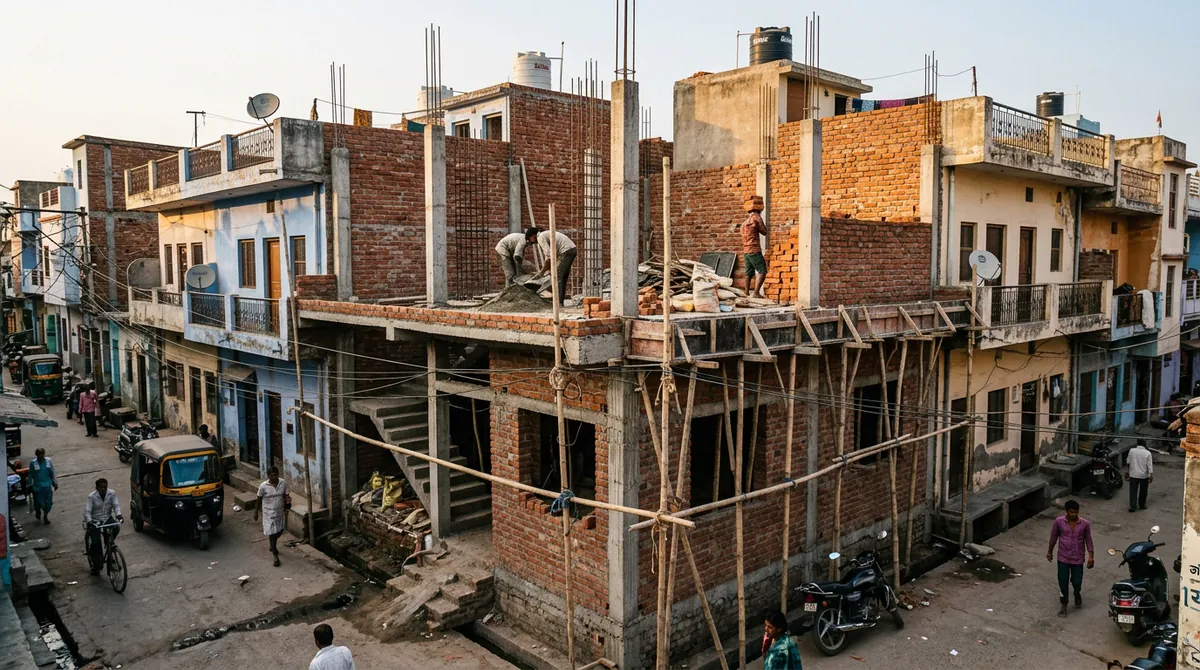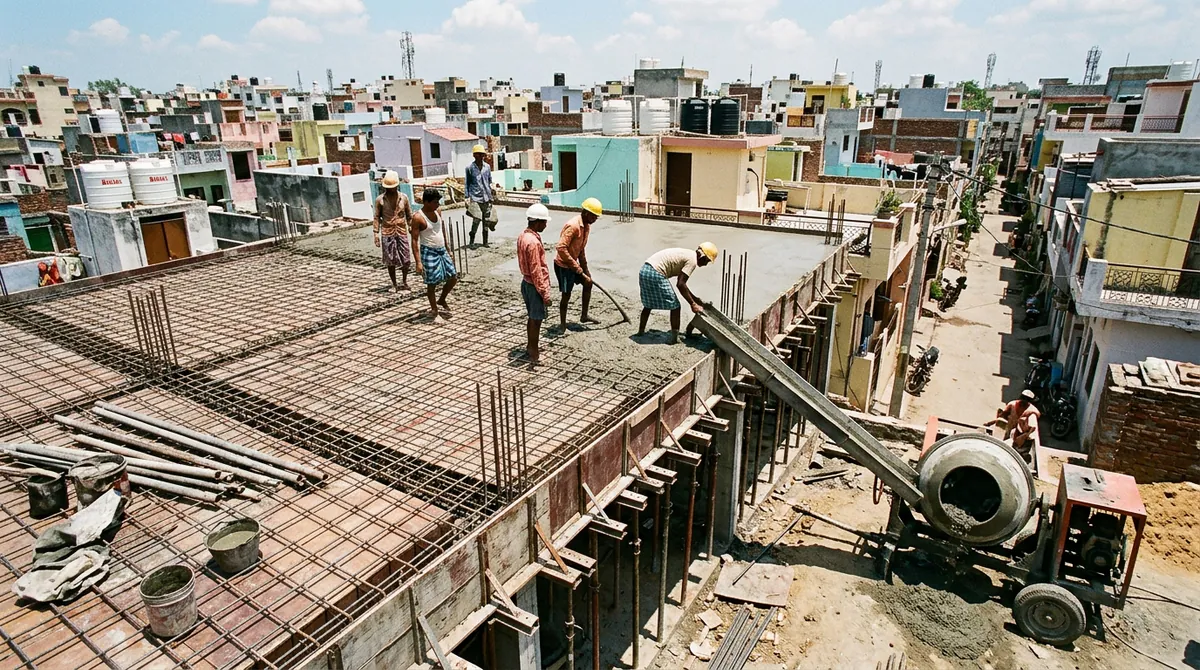
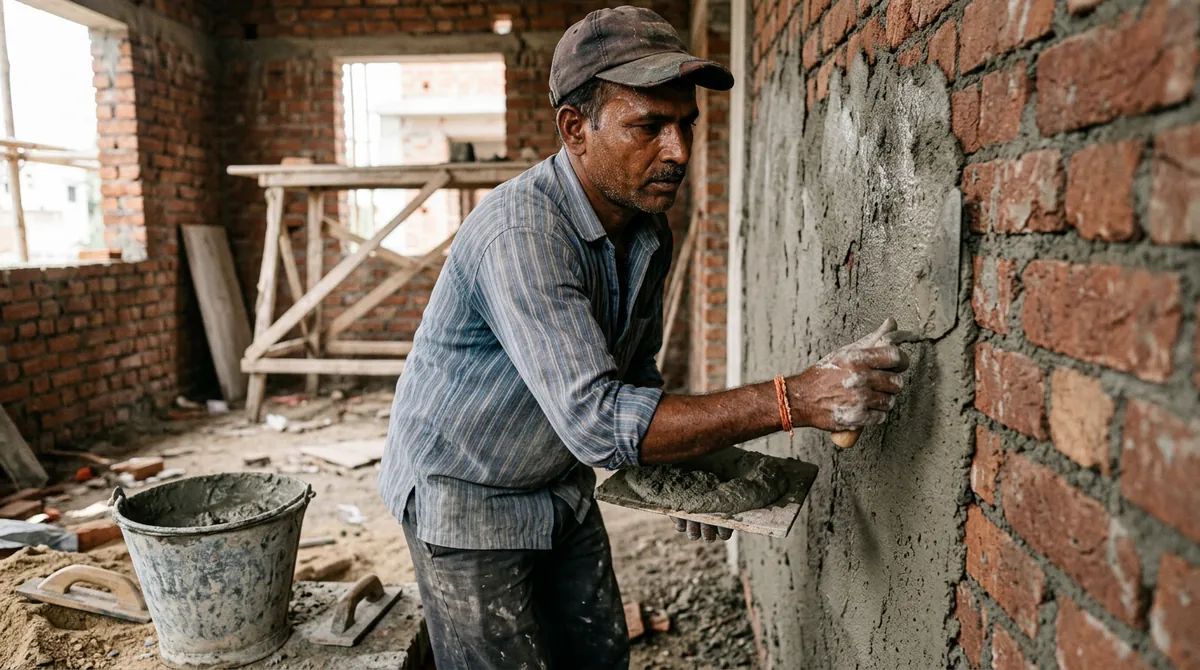
Plastering is the final protective shield of your brick structure. It not only provides a smooth canvas for paint but seals brick joints against driving rain and damp weather in Bihar.
1. Pre-Wetting Brick Walls
Brick walls must be thoroughly soaked with water at least 2 hours before plastering. Dry bricks will suck the hydration water out of the fresh cement mortar, leading to powdering and micro-cracks.
2. Cement-to-Sand Mixing Ratios
Different parts of the residential structure require specific strength mortar mix ratios:
- Internal Wall Plaster: 1 part cement to 5 or 6 parts sand (1:5 or 1:6 mix).
- External Wall Plaster: 1 part cement to 4 parts sand (1:4 mix) along with waterproofing admixtures.
- Ceiling Plaster: 1 part cement to 3 parts fine sand (1:3 mix) for heavy adhesion.
3. Waterproofing & Damp Prevention
Bihar's high groundwater and humidity level make saltpetre (shora) a common issue. Adding a standard waterproofing liquid additive to the external wall plaster mix seals capillary pores against dampness.
Always mix the liquid waterproof compound into the gauging water first, then add the water to the dry cement-sand mix. Never pour it directly onto dry cement.
4. Plaster Curing Requirements
Once plastering is completed, curing must start the next day. Spray water on the plastered surface 2-3 times daily for a minimum of 7 to 10 days to achieve maximum hardness and durability.
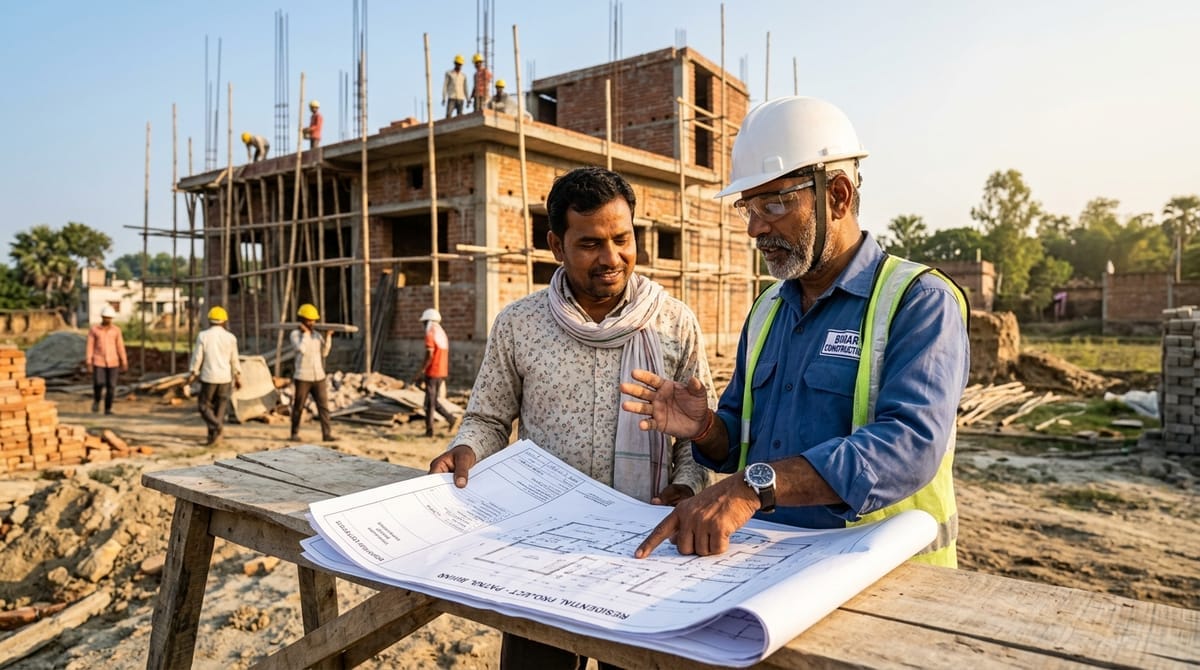
Shyam Kumar is a respected local residential contractor in Muzaffarpur, Bihar. Over the last 15+ years, his labour force has successfully constructed 100+ structural frames.